
What Is Shou Sugi Ban (Yakisugi)? A Complete Australian Guide
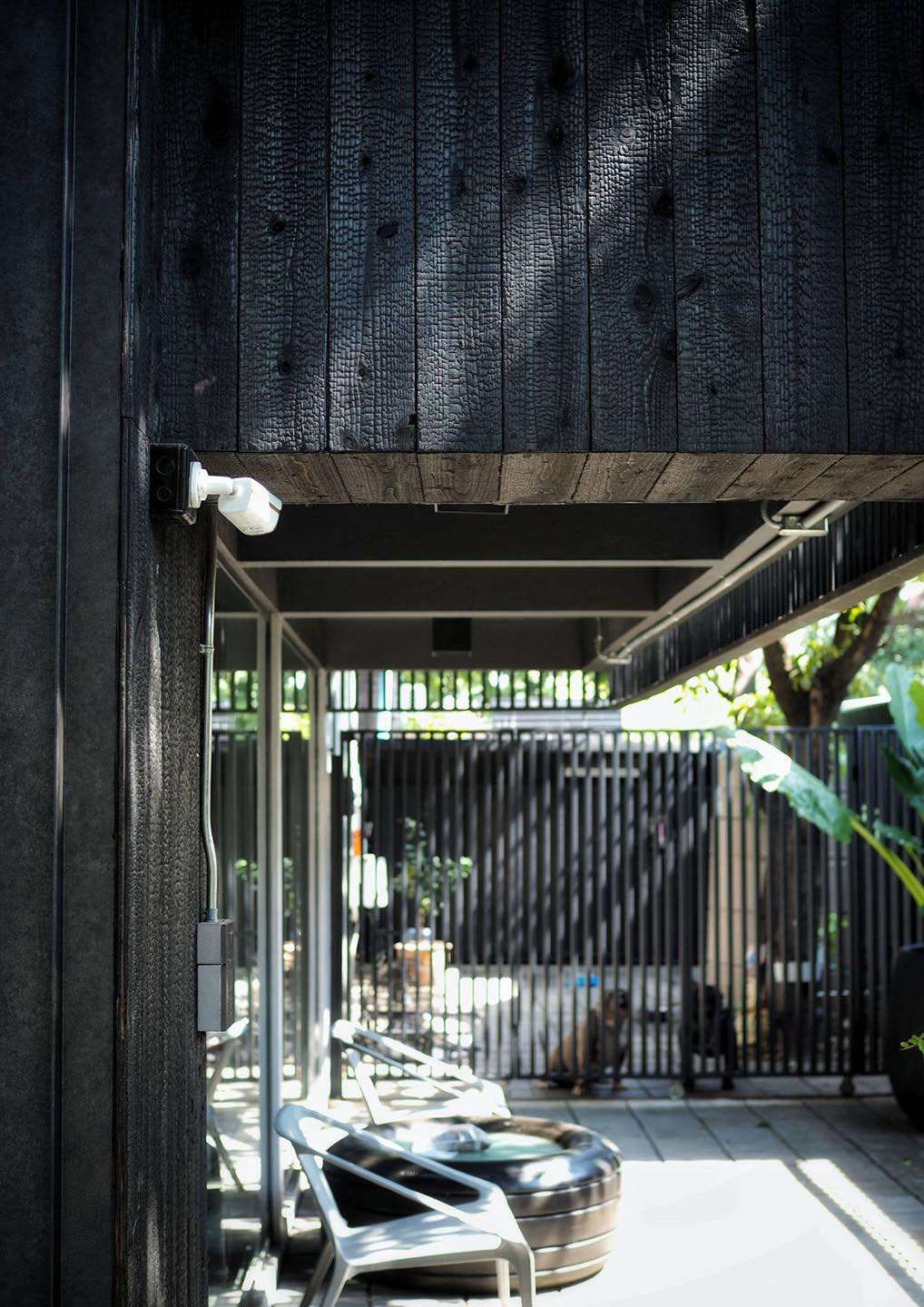
Shou sugi ban is the Japanese practice of charring timber to protect and beautify it. The surface of the board is deliberately burned, then cooled, cleaned and finished, leaving a carbon layer that shields the wood underneath. The result is a deep, textured black cladding that has been used on Japanese buildings since the Edo period.
This guide explains what shou sugi ban is, where it comes from, how authentic Japanese yakisugi is made, and how it performs in Australian conditions. It also covers the honest difference between genuine Japanese-imported sugi and the charred Australian hardwood sold by some local suppliers, so you can specify the right material with confidence.
What Is Shou Sugi Ban and Where Does It Come From?
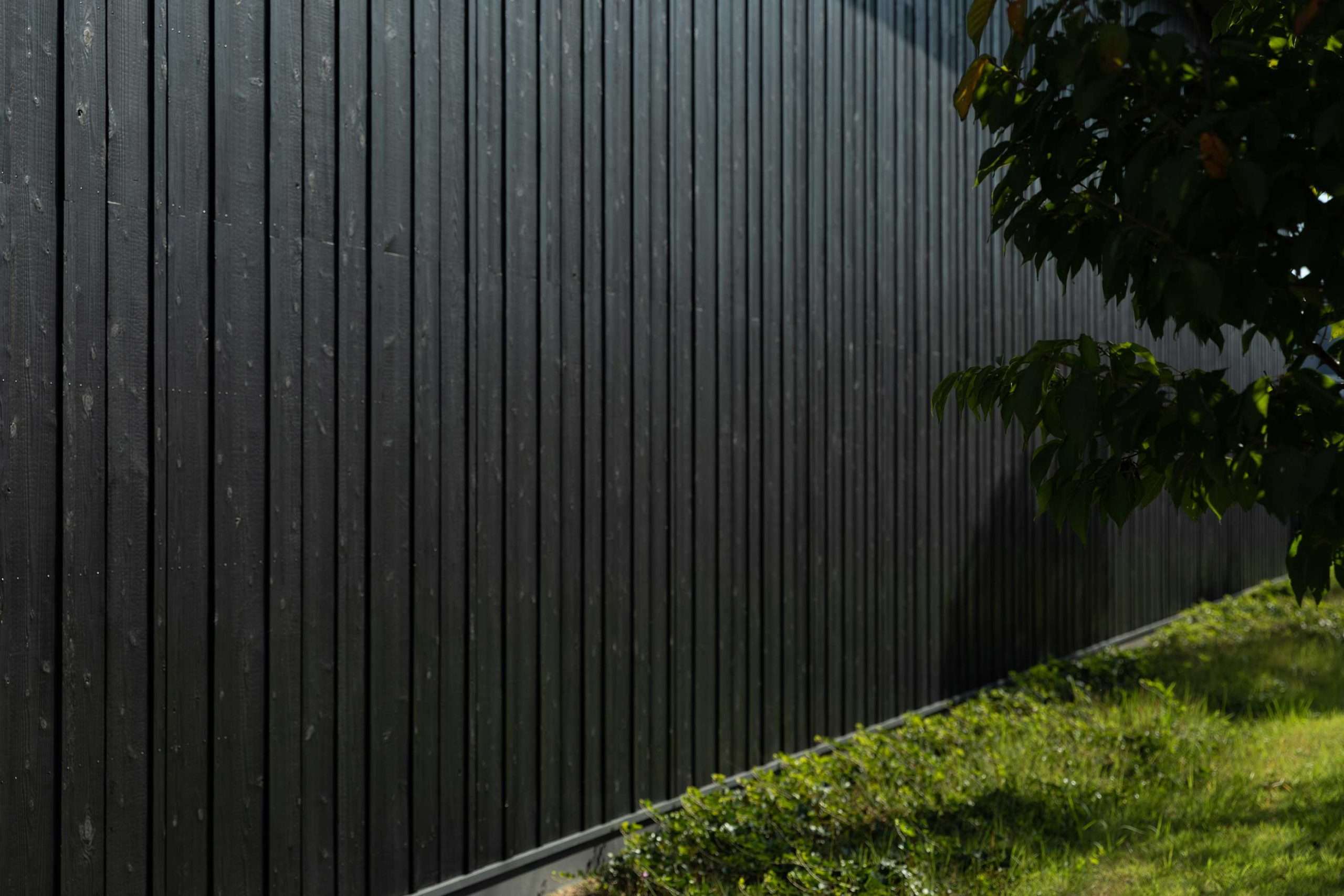
Shou sugi ban (焼杉板) is a traditional Japanese method of preserving timber by charring its surface with fire. The technique originated in Japan, where it was developed to protect cedar cladding on houses, fences and storehouses against rain, sun and weather. By converting the outer layer of the timber to carbon, the builder created a durable, weather-resistant skin without paints, chemicals or sealers.
The wood used in authentic shou sugi ban is sugi, or Cryptomeria japonica, the Japanese cedar. The technique is bonded to this species. Sugi is light, dimensionally stable and takes the char beautifully, which is why the traditional name for the finished product is yakisugi, literally “burnt cedar”.
A note on the name itself is useful here, because it is the source of constant confusion in the trade. The same characters can be read two ways in Japanese. The native Japanese reading is yakisugi. The Sino-Japanese reading of the same characters produces shou sugi ban, the name that travelled into English and now dominates internet searches in Australia and the West. They describe the same craft. We cover the distinction in full in the questions below.
How Is Authentic Yakisugi Made? The Charring Process
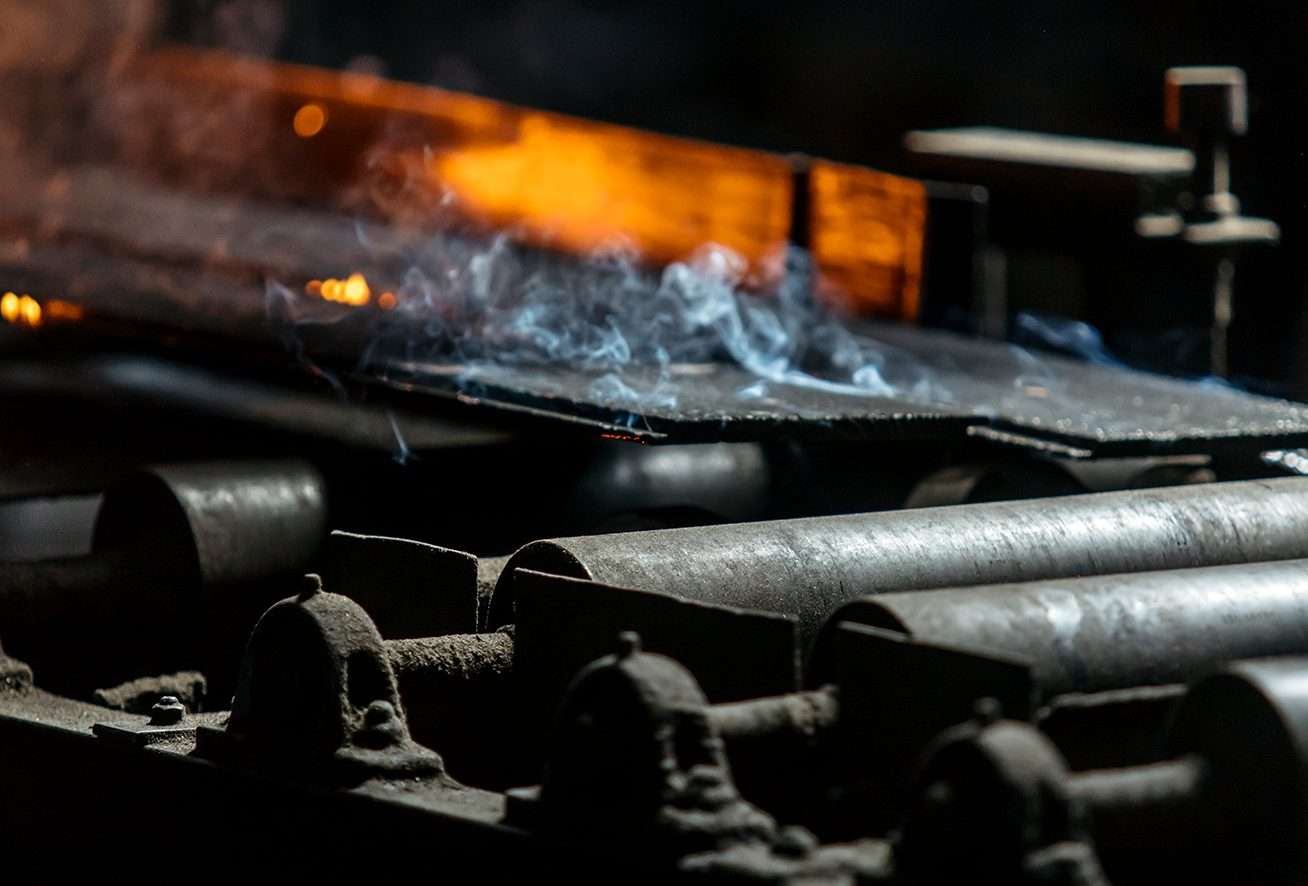
Traditional yakisugi is made by burning the face of the timber in a controlled way, then arresting the burn before it eats into the structural body of the board.
In the classic Japanese method, three planks of sugi are bound into a triangular chimney and a fire is drawn up the inside. The flue effect chars the inner faces quickly and evenly. The burn is watched closely, because the goal is a stable carbon layer, not a destroyed board. Once the right depth of char is reached, the planks are separated and the fire is doused with water.
What happens next defines the finish:
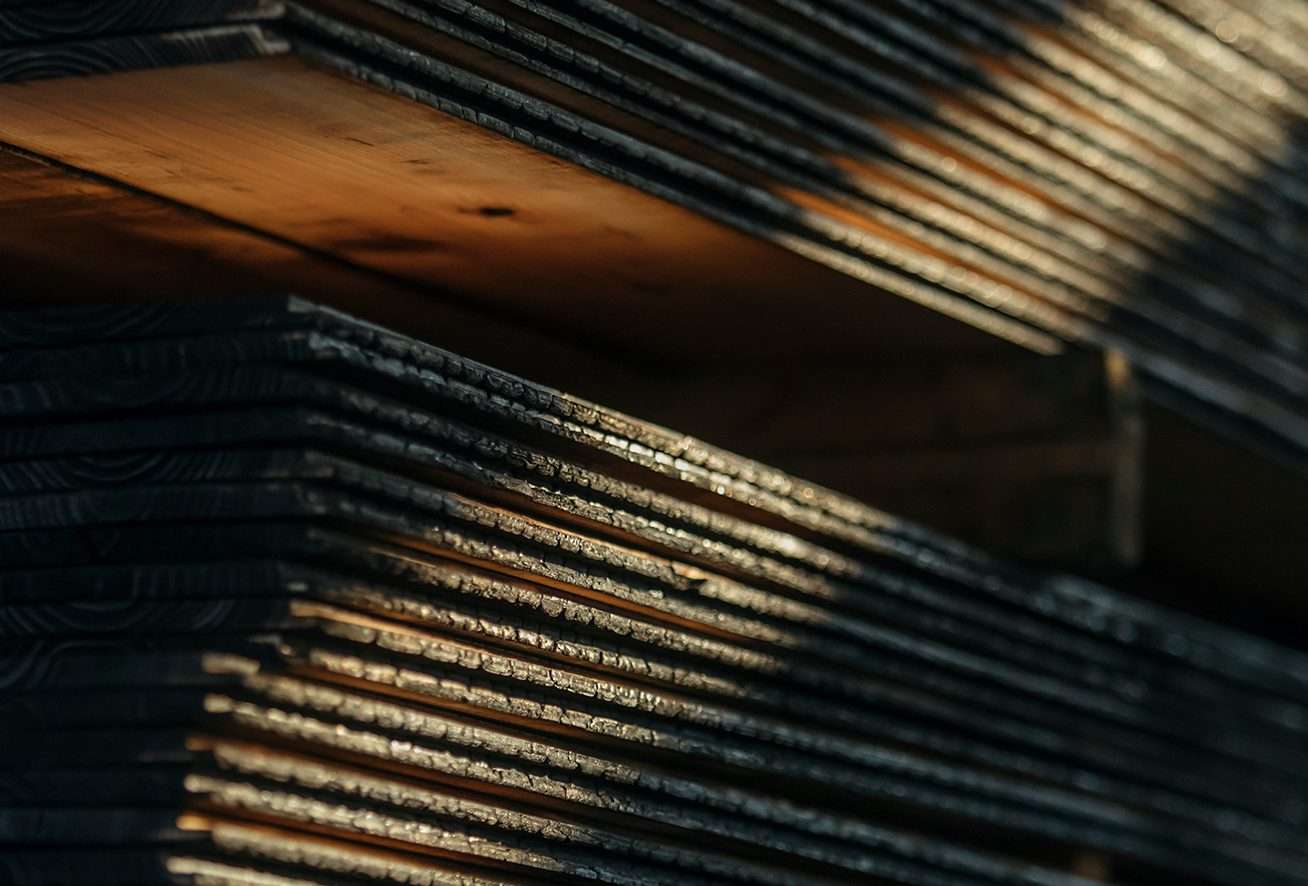
- The board can be left with its full, fragile, crocodile-skin carbon layer intact for the deepest black and the most traditional appearance.
- It can be lightly brushed to knock back the loose soot and reveal the grain texture beneath.
- It can be hard-brushed and finished with oils or coatings for a more refined, hard-wearing surface and a wider colour range.
The charred surface does real work. The carbon layer is chemically stable. Charring also drives moisture out of the timber surface and partially seals it, which slows future water absorption. Done properly on the right species, this is a preservation method, not a decorative scorch.
This is the key quality line in the market. Authentic yakisugi is charred sugi made by producers who understand burn depth and timber selection. A quick pass with a blowtorch over a random hardwood board is not the same thing, and it does not perform the same way.
Authentic Japanese Sugi vs Charred Australian Hardwood
Not all charred cladding is equal, and the difference matters for both appearance and performance.
Studio Tsukuru supplies genuine Japanese yakisugi, charred sugi (Cryptomeria japonica) imported direct from a Japanese mill in continuous operation since 1974. The timber is PEFC-certified and Goho Wood certified under Japan’s Clean Wood Act. This is the original article: the species, the source and the method are all authentically Japanese.
Several Australian suppliers instead char local hardwood, such as spotted gum or blackbutt, and market it as shou sugi ban. Others sell composite or aluminium imitations printed to look like burnt wood. These are different products with different behaviour.
The case for authentic Japanese sugi rests on a few honest points:
- Species suited to the craft. Sugi is the timber the technique was designed around. Its low density (around 350 to 420 kg/m³) lets the char form a deep, stable, insulating carbon layer. Dense hardwood chars differently and does not produce the same traditional crocodile-skin texture.
- Stability and movement. Sugi is light and dimensionally stable, which suits long cladding boards exposed to weather.
- Provenance you can verify. Direct import from a named, certified Japanese mill is a documented chain, not a marketing label.
- The genuine aesthetic. The look and feel of real yakisugi is the reason people want it. Charred hardwood is a substitute, not the original.
There is one honest caveat where dense hardwood is sometimes raised: bushfire density thresholds. We address that directly in the BAL section below, because the picture is more nuanced than “denser is always better”.
The Three Finishes: Hakuu, Benii and Sumii
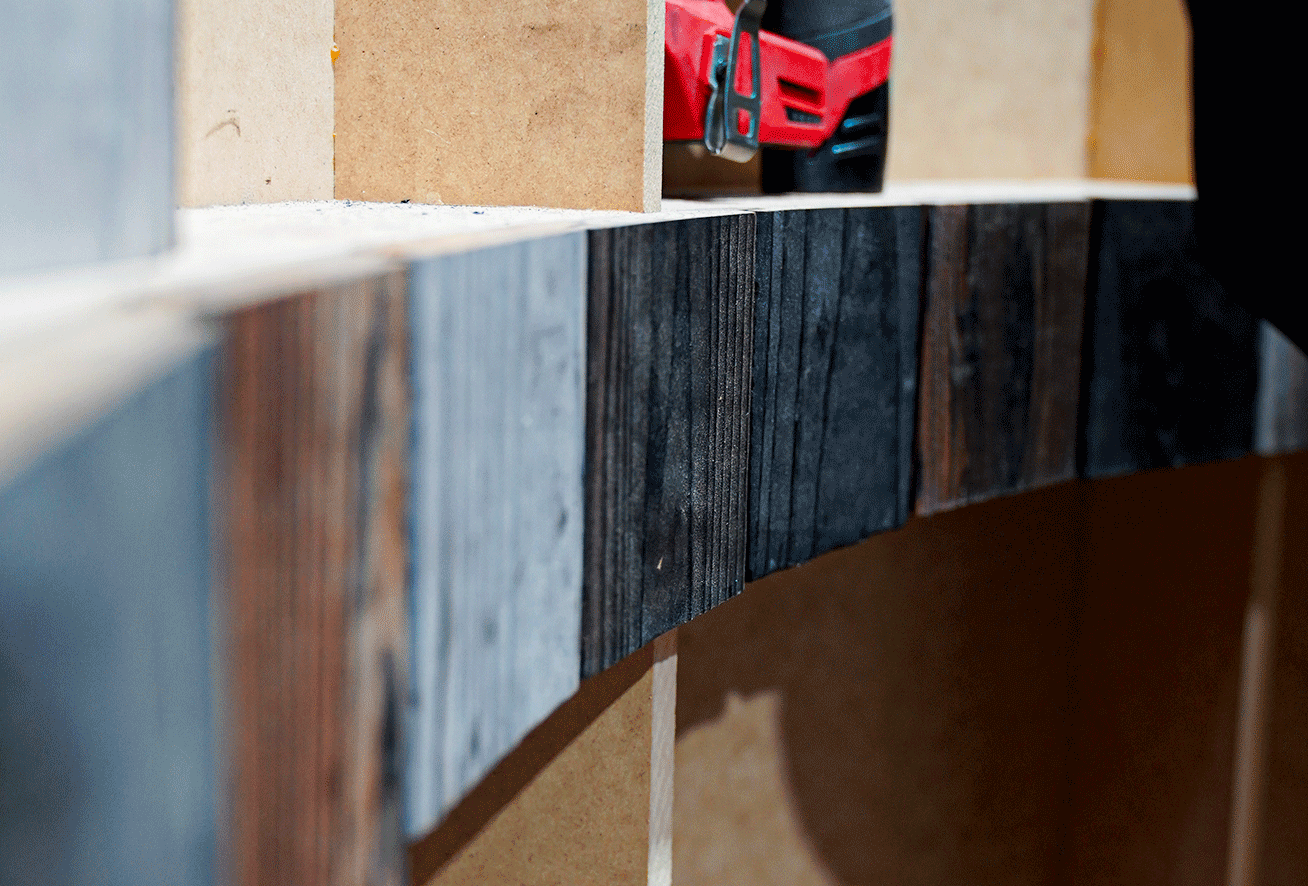
Studio Tsukuru offers authentic yakisugi in three distinct finishes. Custom colour-matching is available across all three ranges.
•Hakuu is the deep black char: the traditional, unglazed yakisugi look, with the full carbon texture left proud. This is the finish most people picture when they imagine shou sugi ban.
•Benii is light-brushed. The surface is gently worked to expose the timber grain beneath a softer black tone, giving a more textured, tactile result while keeping the charred character.
•Sumii is hard-brushed and available in custom coated colours, including Sahara, Mocha, Drift and Dune. This range suits projects that want the durability and craft of yakisugi with a warmer or more contemporary palette.
All three start from the same genuine Japanese sugi and the same charring tradition. The difference is in how far the surface is brushed back and finished.
Durability, Maintenance and Lifespan
Authentic yakisugi is built to last. Studio Tsukuru’s sugi cladding has a serviceable life of 30 years or more, and the boards carry a 10-year manufacturer’s limited warranty covering delamination and structural failure. The warranty is transferable, and is void if installation guidelines are not followed.
The canonical board dimensions are 140mm total width, 122mm exposure, 21mm thickness and 3,930mm length. Boards should be installed at a moisture content of 14% or lower.
Maintenance is minimal and depends on the finish you choose. The carbon layer of a traditional Hakuu finish is the protection: it is a mineral surface rather than a coating, so there is no paint film to crack, blister or peel. Over decades the surface will weather and may lighten in places, which many owners accept as part of the material’s character. For brushed and coated finishes such as Benii and Sumii, periodic re-oiling will keep the colour and surface at their best. The timber does not require painting or sealing to perform.
For fixings, Studio Tsukuru recommends SPAX stainless steel fasteners only: A2 grade for inland projects and A4 grade for coastal environments. Technical specifications and installation guides are available in our resources library. Refer to SPAX technical documentation for fastener selection, and note that the final fastener specification is the responsibility of the builder or architect.
BAL and Bushfire Guidance (AS 3959 (see our guide to BAL ratings in Australia))
Bushfire compliance in Australia is governed by AS 3959, which assigns a Bushfire Attack Level (BAL) to a site. Timber cladding is permitted at lower BAL ratings and restricted at higher ones. The guidance below is general; always confirm the requirement for your specific site with your building surveyor or bushfire consultant.
- BAL-LOW and BAL-12.5:sugi yakisugi can be used directly, with no extra measures required.
- BAL-19: a compliant wall system is needed. Sugi’s density falls below the 750 kg/m³ threshold that AS 3959 uses for direct use at this level, so a non-combustible substrate and sarking are required behind the cladding.
- BAL-29 and above: an engineered system with a Fire Resistance Level of 60/60/60 is required. Importantly, this applies to all timber, including dense Australian hardwood, so at this level the density advantage some hardwoods claim no longer exempts them.
- BAL-FZ (Flame Zone): timber cladding is generally unsuitable.
The practical takeaway is that timber selection alone does not determine bushfire compliance above the lower BAL ratings. The wall system does. This is also where the “denser hardwood” argument loses much of its force, because at BAL-29 and above every timber needs an engineered solution regardless of species.
Frequently Asked Questions
Can you shou sugi ban any wood?
In principle you can char almost any timber, but the traditional technique was developed for and performs best on Japanese sugi (Cryptomeria japonica). Sugi’s low density lets it form the deep, stable, insulating carbon layer that gives yakisugi its character and its durability. Denser timbers can be charred, but they char differently, do not produce the same traditional texture, and do not behave the same way over decades. So while the answer to “can you char any wood” is technically yes, authentic, long-lasting yakisugi is a product of the right species charred by people who understand the craft.
What are the disadvantages of shou sugi ban?
The honest disadvantages are these. A traditional, unbrushed char (the deepest black finish) can transfer soot if it is handled or rubbed, until it is brushed or coated, so finish choice matters for high-touch areas. The charred surface will weather and may lighten over many years, which is natural but worth understanding before you specify it. There is also a wide quality gap in the market: cheaply scorched hardwood marketed as shou sugi ban will not perform like authentic charred sugi, so provenance matters. Finally, bushfire-prone sites above the lower BAL ratings require an engineered wall system, which is a design consideration for any timber cladding, not only yakisugi.
How long will shou sugi ban last?
Authentic Japanese yakisugi has a serviceable life of 30 years or more when correctly installed and maintained. Studio Tsukuru backs its sugi cladding with a transferable 10-year manufacturer’s limited warranty covering delamination and structural failure. Lifespan depends on correct installation (including a maximum installation moisture content of 14%), appropriate fixings, and basic upkeep such as periodic re-oiling on brushed and coated finishes. The traditional charred surface is the preservative, which is why properly made yakisugi can last for generations.
What is the difference between yakisugi and shou sugi ban?
They are the same craft under two readings of the same Japanese characters (焼杉板). Yakisugi is the native Japanese reading and is the term used in Japan. Shou sugi ban comes from an alternative (Sino-Japanese) reading of those characters and is the name that became common in English-speaking countries. There is no difference in the material or the method. In practice, “yakisugi” tends to signal genuine Japanese-made charred sugi, while “shou sugi ban” has become a broad Western umbrella term that is sometimes applied to charred local hardwoods as well. If authenticity matters to you, ask what species is being charred and where it comes from.
Specify Authentic Japanese Yakisugi
Studio Tsukuru supplies genuine Japanese yakisugi, imported direct from Japan and available in three finishes with custom colour-matching. To view boards, finishes and specifications, see our shou sugi ban cladding range.
To discuss a project, contact Studio Tsukuru on 0401 270 818 or contact@studiotsukuru.com.au. We deliver Australia-wide.