

Why Sustainable Timber Outperforms Synthetic Cladding Materials
Sustainable timber cladding consistently outperforms synthetic cladding materials when it comes to environmental impact, long-term durability, and architectural integrity. Unlike plastic or composite products, responsibly sourced timber is renewable, repairable, and designed to age naturally rather than deteriorate. This is why architects increasingly specify sustainable timber cladding for residential and commercial projects seeking longevity and environmental accountability.
Key Takeaways
- Sustainable timber is renewable and stores carbon throughout its lifespan
- Timber ages naturally and can be repaired or refinished rather than replaced
- Synthetic cladding often degrades under UV exposure and heat
- Timber offers greater material honesty and architectural depth
- Lifecycle costs and environmental impact favour natural materials over time
The Growing Shift Away from Synthetic Cladding
Across Australian architecture, there is a clear shift away from synthetic cladding materials such as PVC boards, aluminium composites, and fibre cement lookalikes. While these products are often promoted as low-maintenance solutions, their long-term performance and environmental cost are increasingly scrutinised.
Architects and builders are returning to natural materials that align with sustainability goals and design longevity. Timber cladding, particularly when produced using traditional techniques, offers performance benefits that synthetic materials struggle to match. This shift reflects a broader understanding that building materials should perform across decades, not just at installation.
Environmental Impact: Renewable Vs Manufactured
The environmental difference between sustainable timber and synthetic cladding begins at material origin.
Why timber is inherently more sustainable
- Harvested from responsibly managed forests
- Renewable and biodegradable
- Acts as a carbon store during its service life
- Requires lower embodied energy to produce
Synthetic cladding materials are commonly derived from fossil fuels or energy-intensive industrial processes. These materials generate higher emissions during manufacture and are difficult to recycle at end of life. Many eventually contribute to landfill waste or long-term pollution.
By contrast, timber cladding sourced and finished responsibly supports regenerative building practices and reduces the environmental burden associated with construction.
Durability and Weather Performance Over Time
Synthetic cladding is often marketed as durable, yet real-world exposure tells a different story. Many synthetic materials suffer from UV degradation, surface brittleness, and irreversible fading, particularly in Australia’s harsh climate.
Once damage occurs, repair options are limited.
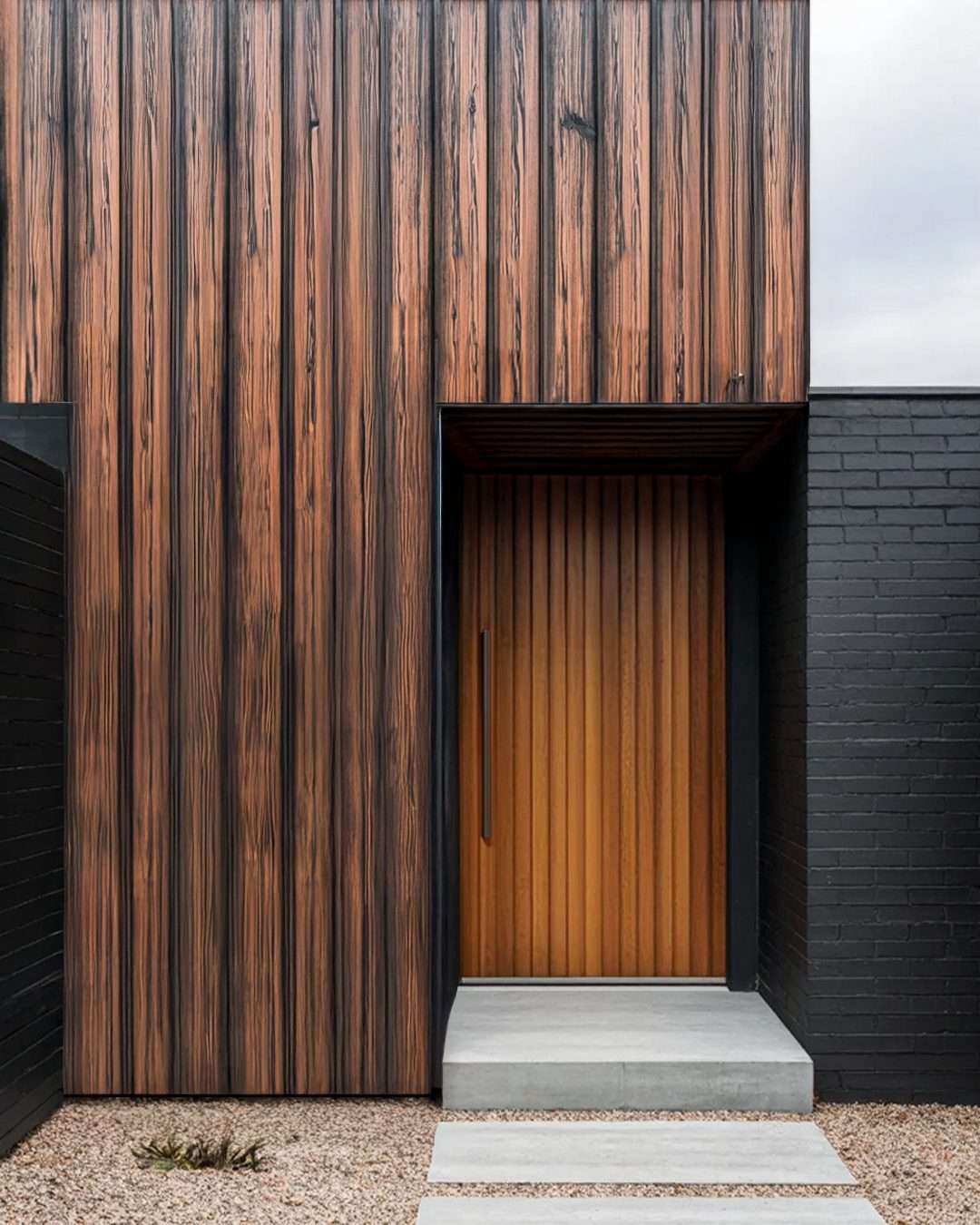
How traditional timber performs differently
Sustainable timber behaves predictably in response to environmental conditions:
- Expansion and contraction occur naturally
- Surface ageing is gradual and uniform
- Individual boards can be repaired or replaced
Traditional Yakisugi timber cladding enhances durability by charring the surface, increasing resistance to moisture and ultraviolet exposure without chemical treatments. This approach results in a long-lasting material that improves in character rather than visibly failing.
Fire Performance and Material Behaviour
Fire safety is a critical consideration in Australian building design. While synthetic cladding is sometimes perceived as safer, many manufactured materials melt, drip, or emit toxic smoke under high temperatures.
Timber behaves differently. When exposed to fire, timber chars at a predictable rate, forming a protective layer that slows combustion and insulates the structural core beneath. This material behaviour is one reason charred timber has been used historically in fire-prone regions.
Products such as Hakuu Natural demonstrate how traditional charring techniques can enhance timber performance while maintaining a natural, untreated finish suitable for long-term architectural applications.
Architectural Authenticity and Material Honesty
Synthetic cladding frequently attempts to replicate the appearance of timber. Repeating grain patterns, artificial textures, and surface coatings often reveal their manufactured nature over time.
Sustainable timber offers:
- Genuine grain variation
- Natural tonal depth
- A tactile surface that cannot be replicated
Architects seeking timeless outcomes prioritise material honesty. Natural timber expresses its origin, craftsmanship, and ageing process without pretending to be something else. The result is a building that feels grounded and enduring rather than trend-driven.
Maintenance Reality: Repair Vs Replacement
Maintenance comparisons between timber and synthetic cladding are often oversimplified.
Synthetic cladding limitations
- Damage is permanent
- Fading cannot be reversed
- Replacement is often the only solution
Timber maintenance in practice
- Re-oiling or refinishing restores appearance
- Individual boards can be replaced
- Weathering is gradual and manageable
Over a full lifecycle, sustainable timber often proves more economical and significantly less wasteful than synthetic alternatives that require complete replacement once deterioration sets in.
Sustainable Timber in Modern Australian Architecture
Australia’s climate presents challenges including high UV exposure, coastal conditions, and temperature extremes. When properly detailed and installed, sustainable timber performs exceptionally well in these environments.
Across residential, commercial, and hospitality architecture, timber cladding is increasingly specified for its balance of performance and aesthetic depth. Built examples showcased in Studio Tsukuru’s completed projects show these same techniques at work in contemporary Australian design.
Why Synthetic Cladding Struggles to Keep Pace
Despite advances in manufacturing, synthetic cladding materials remain constrained by their origins. They lack the ability to:
- Store carbon
- Age naturally
- Be repaired easily
- Deliver authentic material depth
As sustainability expectations rise, the limitations of synthetic materials become more visible. Timber’s adaptability and longevity ensure it remains relevant as building standards and environmental responsibilities evolve.
Build with Materials That Last
Sustainable timber outperforms synthetic cladding because it aligns with the fundamentals of responsible architecture: longevity, environmental accountability, and material honesty.
By choosing natural timber cladding, architects and builders invest in a material that delivers long-term performance while reducing environmental impact. Studio Tsukuru applies that principle directly in its Japanese charred timber cladding, using charred Japanese cedar rather than a manufactured substitute. To learn more about the philosophy and craftsmanship behind Studio Tsukuru’s approach, visit our About Us page or get in touch to discuss your project.