

Sumii Natural

Sumii Natural
Charred + Brushed + Uncoated
Traditional charred Yakisugi (Shou Sugi Ban) Japanese cedar, hard-brushed (double-brushed) and uncoated to keep natural grain exposed for bold definition and depth
Product Overview
Sumii Natural is a double-brushed Yakisugi (Shou Sugi Ban) sugi that aggressively reveals fibre relief and grain, producing a strong, tactile surface. Left uncoated and unoiled, it develops a crafted, pre-aged character in situ, ideal for projects that prioritise honest texture and pronounced timber presence. It sits within the broader Sumii Yakisugi range
Key Features
-Double-brushed (hard-brushed) Yakisugi (Shou Sugi Ban) for pronounced grain and depth
-Keeps natural Japanese cedar grain exposed for a bold, tactile surface
-Sustainably sourced Japanese cedar (sugi)
-Uncoated and unoiled to allow authentic, site-specific patination
-High-contrast texture that enhances shadow and architectureal relief
-Spec-ready profiles for cladding, battens and feature timberwork
Use Cases
-Exterior cladding and textured facades requiring strong grain expression
-Feature walls and entry treatments with a crafted, pre-aged look
-Privacy screens, battens and architectureal shading devices
-Balconies, pergolas and exposed external joinery in moderate exposure zones
-Interior feature ceilings and panelled linings that demand a pronounced timber presence
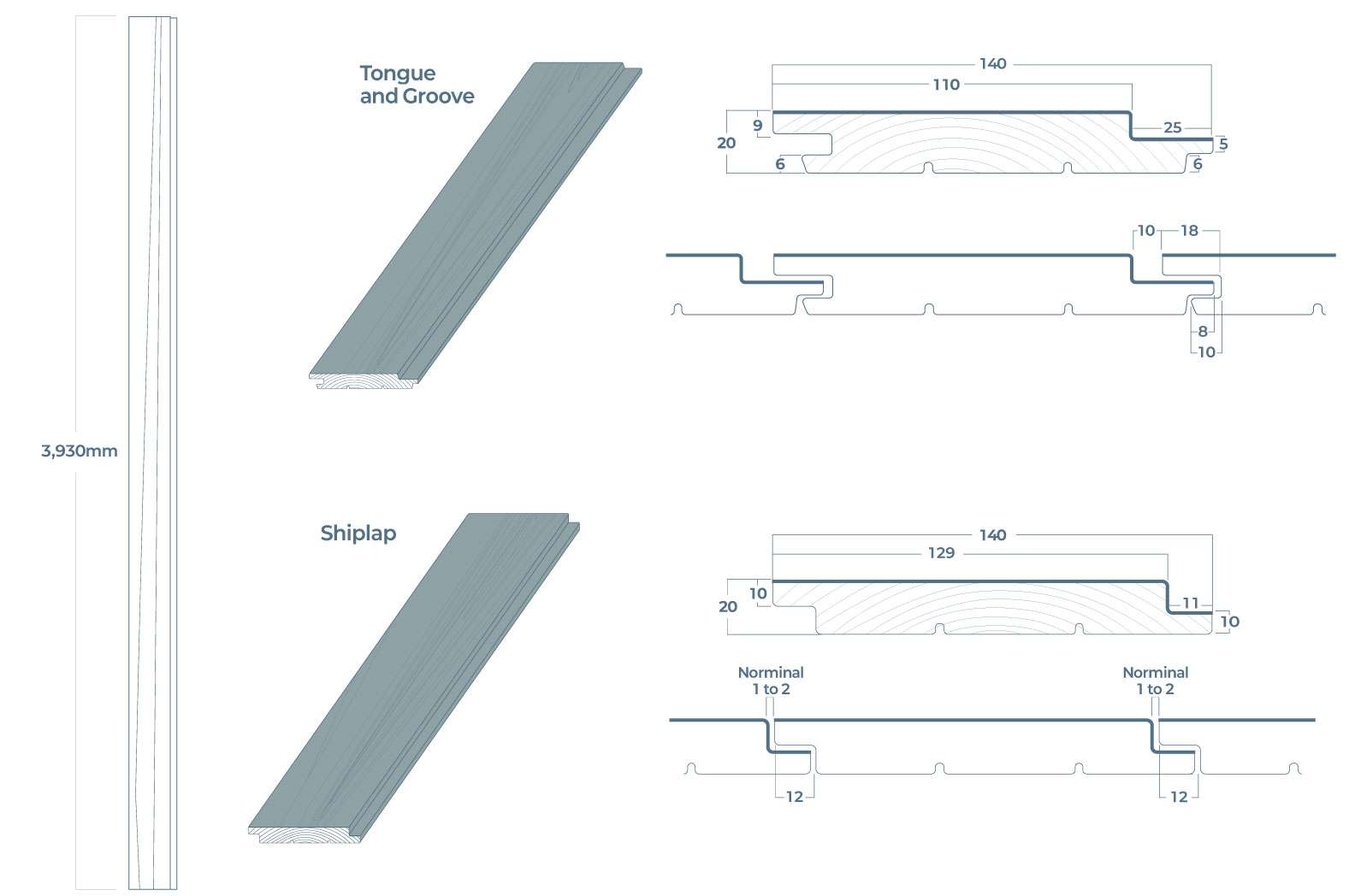
profiles and dimensions
(mm)
Specifications
Our boards are supplied in two profiles, tongue and groove or shiplap.
Species, thickness and length are the same across both; only the cover width differs:
- Species: Cryptomeria japonica (Japanese cedar / sugi), density 350 to 420 kg/m3
- Board width: 140mm total. Cover width 122mm for tongue and groove, 129mm for shiplap. Use the cover width for take-off, not the 140mm face.
- Thickness: 21mm
- Length: 3,930mm
- Serviceable life: 30+ years
- Moisture content: 14% or lower at installation
The low density that makes sugi easy to handle and quick to install is the same property that gives genuine shou sugi ban its character. It is a cladding board, designed and milled for the wall.
Installation Tips
Always include a ventilated back cavity (min 20 mm), stainless steel fixings (use 316/A4 in coastal zones) and leave a 6–10 mm expansion gap to accommodate seasonal movement. Pre-finish cut edges with the supplied breathable hydrophobic coating and avoid non-breathable sealers; expect recoats roughly every 2–3 years in coastal exposure and 3–5 years inland.
Request a coated sample or the full technical spec sheet via studiotsukuru.com.au.
FAQ
Sumii is a Yakisugi a.k.a Shousugiban charred timber cladding made from premium Japanese cedar (sugi), featuring a distinctive hard-brushed finish that brings bold texture and depth to the wood’s surface. Each board is handpicked for colour and grain consistency, offering a striking and tactile aesthetic for both interior and exterior applications.
Unlike smoother profiles such as Hakuu or lightly brushed finishes like Benii, Sumii’s hard-brushed surface creates a more pronounced texture, enhancing the visual impact and tactile quality of the timber. This makes it ideal for projects that prioritise strong, architectural statements while still benefiting from Yakisugi’s durable charred surface.
Sumii is perfect for exterior cladding, architectural facades, feature walls, and high-end interior applications. It is suitable for both vertical and horizontal installation and complements contemporary, rustic, and traditional design styles that require a textured finish.
Coated boards feature a breathable, non-film-forming finish with hydrophobic protection, resisting UV, moisture, and dirt build-up. When installed without oil, Sumii will develop a natural patina over time; re-oiling can be done later to maintain or enhance the colour. Regular gentle cleaning is recommended to preserve its bold texture and refined appearance.