
CodeMark and Timber Cladding: What Australian Specifiers Need to Know
If you are specifying charred timber cladding in Australia, sooner or later someone on the project team asks the CodeMark question. Builders hear it from certifiers, architects hear it from builders, and suppliers get the email: does your cladding carry CodeMark certification? It is a fair question, and it deserves a straight answer rather than a vague one. Here is how CodeMark actually works, why solid timber cladding rarely carries it, and what evidence certifiers look for instead.
What CodeMark actually is
CodeMark Australia is a voluntary, third-party building product certification scheme administered by the Australian Building Codes Board (ABCB), the same body that publishes the National Construction Code. Certificates, formally called Certificates of Conformity, are issued by independent accredited certification bodies after they assess a product against specific NCC requirements.
A CodeMark certificate does one powerful thing: building authorities in every state and territory must accept it as evidence that the product complies with the NCC provisions listed on the certificate, provided the product is used exactly as the certificate describes, within its stated limitations and conditions. Certificates are valid for three years at a time.
That mandatory acceptance is unique. Every other form of compliance evidence is assessed on its merits by the building surveyor or certifier on your project.
Is CodeMark mandatory?
No. CodeMark is one of several recognised ways to demonstrate a product is fit for purpose under the NCC’s evidence of suitability provisions in Part A5. The code accepts a range of documentary evidence, including reports from accredited testing laboratories, certificates from suitably qualified professionals, and other technical documentation that shows a product meets the relevant requirements.
The ABCB itself notes that CodeMark certification is time consuming and costly, and that it best suits innovative or higher-risk products that would otherwise struggle to show a clear compliance pathway. That is why you tend to see CodeMark on new composite systems, proprietary membranes and structural innovations far more often than on conventional materials.
Why solid timber cladding rarely carries CodeMark
Timber external cladding is one of the oldest and best understood wall claddings in Australia. Its compliance pathway is conventional: recognised species and durability information, established installation practice over a drained and ventilated cavity, weatherproofing achieved through detailing such as membranes, flashings and seals in line with the NCC’s weatherproofing performance requirements, and bushfire performance addressed under AS 3959.
Because that pathway already exists, few solid timber cladding suppliers pursue CodeMark, and a timber board without a CodeMark certificate is the norm rather than a warning sign. Our yakisugi cladding does not hold CodeMark certification, and we would rather tell you that plainly and hand you the documentation certifiers actually use.
How compliance works for yakisugi cladding
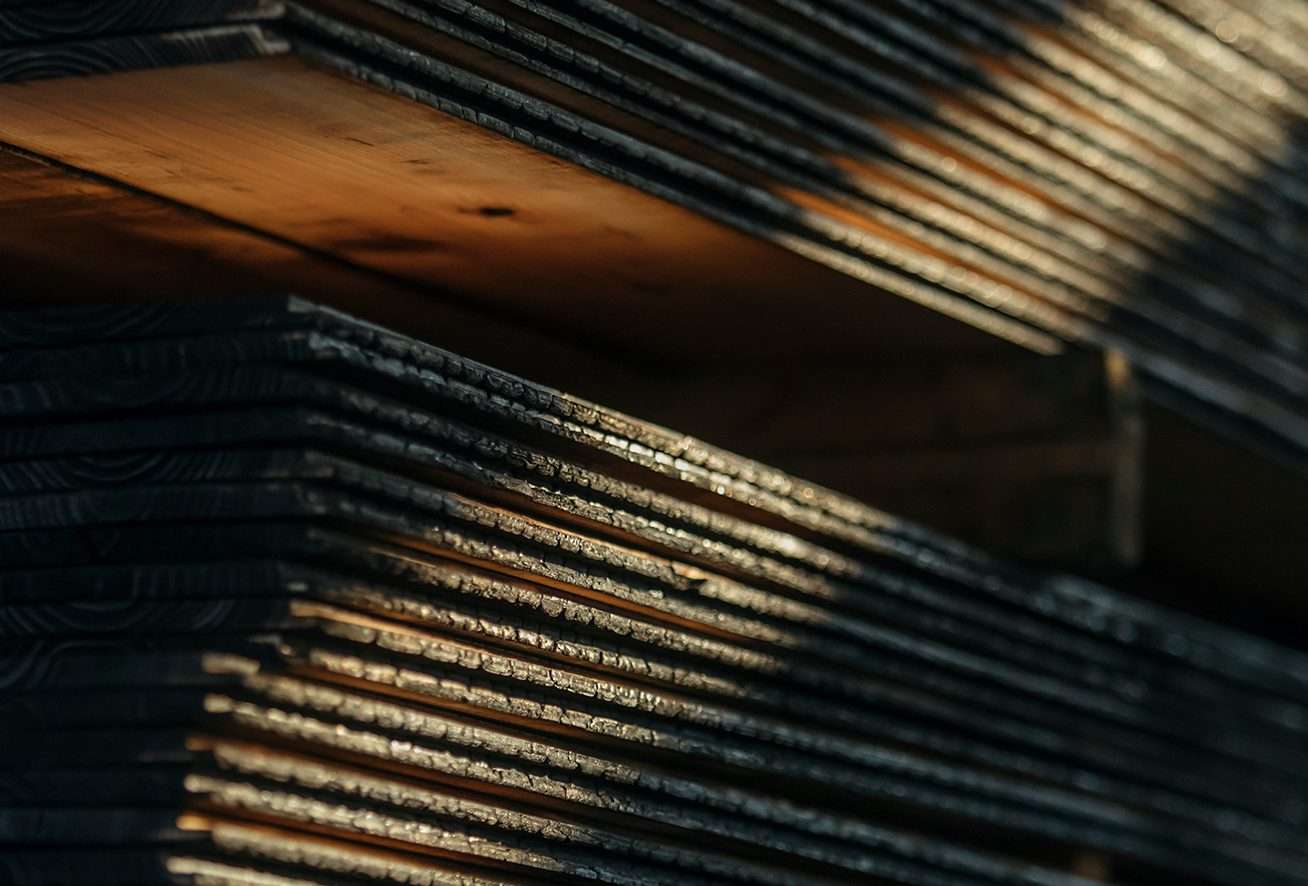
Yakisugi is charred sugi (Japanese cedar) cladding: a solid timber board with a carbonised surface layer, charred in Japan and installed like any premium timber cladding. For compliance purposes, certifiers assess the same things they assess for any external timber cladding.
- The documentation set. We provide specification sheets, technical data sheets for each finish, installation guidance and warranty terms, all downloadable from our resources library.
- Weatherproofing by design. Weatherproofing is achieved through the wall system: sarking or a suitable membrane, a drained and ventilated cavity, and correct flashing and penetration details. Your builder and certifier confirm the detailing against the NCC for your building class.
- Bushfire ratings. Under AS 3959, timber cladding remains available at the lower bushfire attack levels. Studio Tsukuru scopes its shou sugi ban cladding to BAL-LOW, BAL-12.5 and BAL-19, with the certifier and the full wall system determining what applies on any given site. There is more detail in our BAL ratings guide.
- Sourcing and legality. Our sugi carries PEFC chain-of-custody and Japanese legal-timber (Goho Wood) certification. These are sourcing and legality certifications rather than NCC compliance evidence, and we keep that distinction clear because certifiers do too.
If a project team wants extra assurance on a specific detail, the right mechanism is usually a project-level assessment by the certifier or a suitably qualified consultant against the evidence above, not a product-level CodeMark certificate.
Questions worth asking any cladding supplier
CodeMark or not, the suppliers worth dealing with can answer these in writing:
- Which species is the board, and what durability information supports it?
- What is the documented BAL scope, and does it match my site’s rating?
- What membrane, cavity and fixing details does the installation guidance require?
- What maintenance schedule keeps the finish and the warranty intact?
- What are the warranty terms, and what voids them?
If you ask us, you will get the answers as documents, not assurances.
Common questions
Is CodeMark certification mandatory for cladding in Australia?
No. CodeMark is a voluntary certification scheme. It is one recognised form of evidence of suitability under the NCC, alongside options such as accredited laboratory test reports and certificates from suitably qualified professionals. Certifiers can accept those other forms of evidence for conventional products like timber cladding.
Does yakisugi cladding need CodeMark?
No. Yakisugi is solid timber cladding and follows the conventional timber compliance pathway: recognised species information, weatherproofing through wall-system detailing, and bushfire assessment under AS 3959. Studio Tsukuru’s yakisugi is scoped to BAL-LOW, BAL-12.5 and BAL-19 and does not hold CodeMark certification, which is typical for solid timber cladding.
What evidence will my certifier want for timber cladding?
Expect to provide the supplier’s specification and installation documents, the wall-system details showing how weatherproofing is achieved, durability and species information, and the site’s BAL report where bushfire provisions apply. Your building surveyor confirms what is sufficient for your building class and state.
Specifying yakisugi?
Start with the boards themselves. Order a yakisugi sample pack and download the spec documents from the resources library. If your certifier has a question this article has not covered, send it through. Compliance questions at spec stage cost nothing and save weeks later.